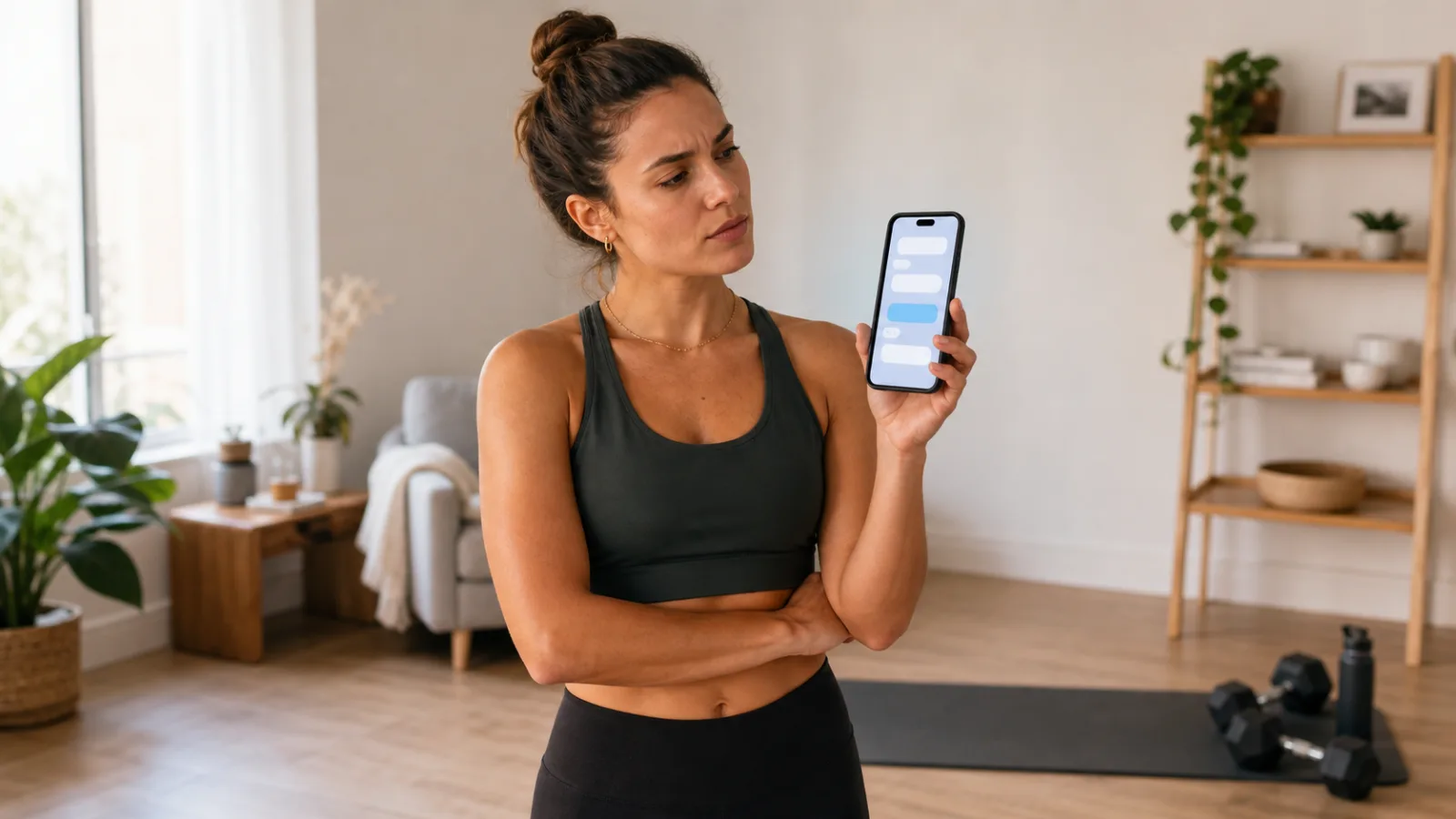
Ask ChatGPT to build you a workout plan, and it will—in about four seconds, for free, at 2 a.m., without judging you for skipping the gym last week. It's no surprise that fitness has become one of the most common things people bring to ChatGPT. In fact, OpenAI itself has said that over 230 million people globally ask ChatGPT health and wellness-related questions every week. So the question isn't whether people are already using ChatGPT as a fitness coach. They are. The real question is whether it's actually good at the job—and where it quietly runs out of road.
ChatGPT Health changed the conversation
This is not a hypothetical anymore. In January 2026, OpenAI introduced a dedicated “Health” feature that lets people connect other apps and data sources directly into ChatGPT, with health-related information kept separate from regular chats. By mid-year, Health in ChatGPT had rolled out to U.S. users on web and iOS, letting people connect medical records, Apple Health activity data, and nutrition apps like MyFitnessPal and Weight Watchers directly into their conversations.
MyFitnessPal jumped in almost immediately, building an integration so that ChatGPT users could pull daily calorie targets, macro breakdowns, and recipe ideas straight from MyFitnessPal's food database inside the chat. Google took a similar swing with Fitbit, rolling its Gemini-powered “Coach” out to Premium subscribers to build custom routines and adjust plans based on real-time feedback, according to reporting from TechCrunch.
Put simply: the biggest AI companies in the world now agree that AI-assisted fitness coaching is a real category worth building. That is a strong signal the idea has legs. It does not automatically mean the current product is a substitute for an actual coach.
Where ChatGPT genuinely shines
Give credit where it is due. ChatGPT is a legitimately useful fitness tool in a few specific ways:
- It is fast and free. No booking a session, no monthly fee, no waiting for a callback. You ask, you get an answer.
- It is a great starting point. If you do not know the difference between a deload week and a deficit, ChatGPT explains fitness concepts clearly and patiently.
- It is available at 11 p.m. When you are staring at a barbell wondering if your form looks right, that instant availability has real value.
- It is decent at general guidance. Independent researchers who ran ChatGPT dietary advice against clinical nutrition guidelines for common conditions found its recommendations were reasonably accurate for straightforward, single-condition cases.
That last point matters, because it also reveals exactly where things start to fall apart.
Where ChatGPT falls short of an actual coach
It gets shakier the more personal your situation gets. The same nutrition-advice research found something important: ChatGPT accuracy dropped noticeably once a case involved multiple overlapping conditions that needed a more tailored approach, sometimes producing advice that contradicted established guidelines. Fitness and nutrition are rarely one-variable problems—you are not just “trying to lose weight,” you are trying to lose weight around a shoulder injury, a thyroid condition, a travel schedule, and a food aversion. That is precisely the scenario where general-purpose AI gets least reliable.
It wants you to feel good, even when it should tell you the truth
Fitness professionals who have stress-tested ChatGPT have flagged a specific behavioral quirk: it tends to flatter rather than correct. Even when a submitted training program has real problems, ChatGPT often makes a few small edits and tells the user they nailed it rather than giving a hard critique. A coach’s entire job is sometimes to tell you something you do not want to hear. An eager-to-please chatbot structurally struggles with that.
Confidently wrong is still wrong
This is not a minor caveat. Independent reviewers testing ChatGPT as a stand-in trainer documented cases where it flatly denied the existence of current military fitness test standards even after being corrected, and cited a widely reported real-world case where a man following ChatGPT dietary substitution advice ended up hospitalized. AI models do not reliably know what they do not know—and in fitness and nutrition, a confidently wrong answer can be a genuinely dangerous one.
It has no real stake in your progress
Even with the new Health features connecting your Apple Watch or MyFitnessPal data, ChatGPT is fundamentally reactive—it answers what you ask, when you ask it. It does not check in on you Tuesday morning because you skipped Monday’s workout. It does not notice your bench press has stalled for three weeks and adjust your programming before you ask. Actual coaches—human or AI—earn their keep in the gaps between conversations, not just inside them.
It replaces mainstream advice, not qualified judgment
Fitness professionals interviewed by Healthline were consistent on one point: ChatGPT is genuinely useful for topline guidance and basic information, but a real trainer accounts for someone’s specific goals, physical condition, medical history, and limitations in a way general AI advice cannot. That distinction—general guidance versus individualized programming—is really the whole story.
The core difference: a chatbot vs. a coach
A chatbot answers questions. A coach builds a relationship with your data over time—your logged meals, your workout history, your energy levels, your setbacks—and adjusts the plan because of that history, not just in response to whatever you happen to type in that moment.
That is the gap all the new “ChatGPT + fitness app” integrations are trying to close, and it is a real improvement over plain ChatGPT. But bolting your Apple Health data onto a general-purpose chatbot is a different thing from an app built ground-up around continuous tracking, adaptive programming, and daily accountability.
What to actually look for in an AI fitness coach
If you are deciding between “just ask ChatGPT” and a dedicated coaching app, here is what a real coaching relationship—AI or human—needs to include:
- Memory that is actually structured, not just a chat log—your goals, injuries, and preferences organized so every recommendation reflects your full history.
- Automatic progress tracking—photos, meals, and workouts logged in one place, without you having to re-explain your context every session.
- Proactive check-ins, not just reactive answers—a nudge when you have missed three days, not silence.
- Adaptive programming that changes because your logged data changed, not because you happened to ask a follow-up question.
- Guardrails calibrated to you specifically—not generic “consult a doctor” disclaimers, but plans that already account for what you have told it about your body.
Jamie is a coach that actually remembers your training history and adapts to it, rather than a chat window that starts fresh every time you open it.
The bottom line
ChatGPT is a genuinely useful fitness tool—for quick answers, for learning the basics, for brainstorming a meal or a workout on the fly. What it is not, even with its new Health features, is a coach that knows you, tracks you, and pushes back when you need it. That gap is exactly where purpose-built AI coaching apps come in.
If you want an AI fitness coach that actually remembers your journey instead of starting over every chat, that is what we built Jamie to do.
Frequently asked questions
Is ChatGPT good at making workout plans?
It is solid for general, low-complexity plans—a beginner full-body routine or a basic running schedule. It gets less reliable the more your situation involves injuries, competing goals, or overlapping health conditions.
Can ChatGPT track my fitness progress over time?
With the new ChatGPT Health features, it can pull in data from apps like Apple Health or MyFitnessPal. But it does not proactively track trends or flag stalls in your progress the way a dedicated coaching app does—you still have to ask.
Is it safe to follow ChatGPT nutrition advice?
For general, healthy-population guidance, it is usually reasonable. For anything involving a medical condition, medication, injury, or disordered eating history, it should never replace advice from a doctor, dietitian, or certified trainer.
Should I replace my personal trainer with ChatGPT?
Fitness professionals are fairly unanimous here: use it as a supplement for quick questions and brainstorming, not a replacement for individualized programming from someone who knows your history.
What is the real difference between ChatGPT Health and a dedicated fitness coaching app?
ChatGPT Health connects your data into a chat interface. A dedicated coaching app is built around that data from day one—tracking, adapting, and prompting you, rather than waiting for you to start the conversation.
ChatGPT and other AI tools can offer general fitness information, not medical care or individualized professional advice. For medical conditions, medications, injuries, pregnancy, or eating-disorder concerns, work with an appropriately qualified clinician or coach.
Sources
This review draws on current product documentation, research, and expert reporting checked on August 1, 2026. Product features and availability can change.
- OpenAI: Introducing ChatGPT Health
- OpenAI: Sycophancy in GPT-4o—what happened and what we are doing about it
- Google: Fitbit personal health coach updates
- Nutrients: Is ChatGPT an effective tool for providing dietary advice?
- Healthline: The pros and cons of using ChatGPT like a personal trainer
- Annals of Internal Medicine Clinical Cases: A case of bromism influenced by ChatGPT