
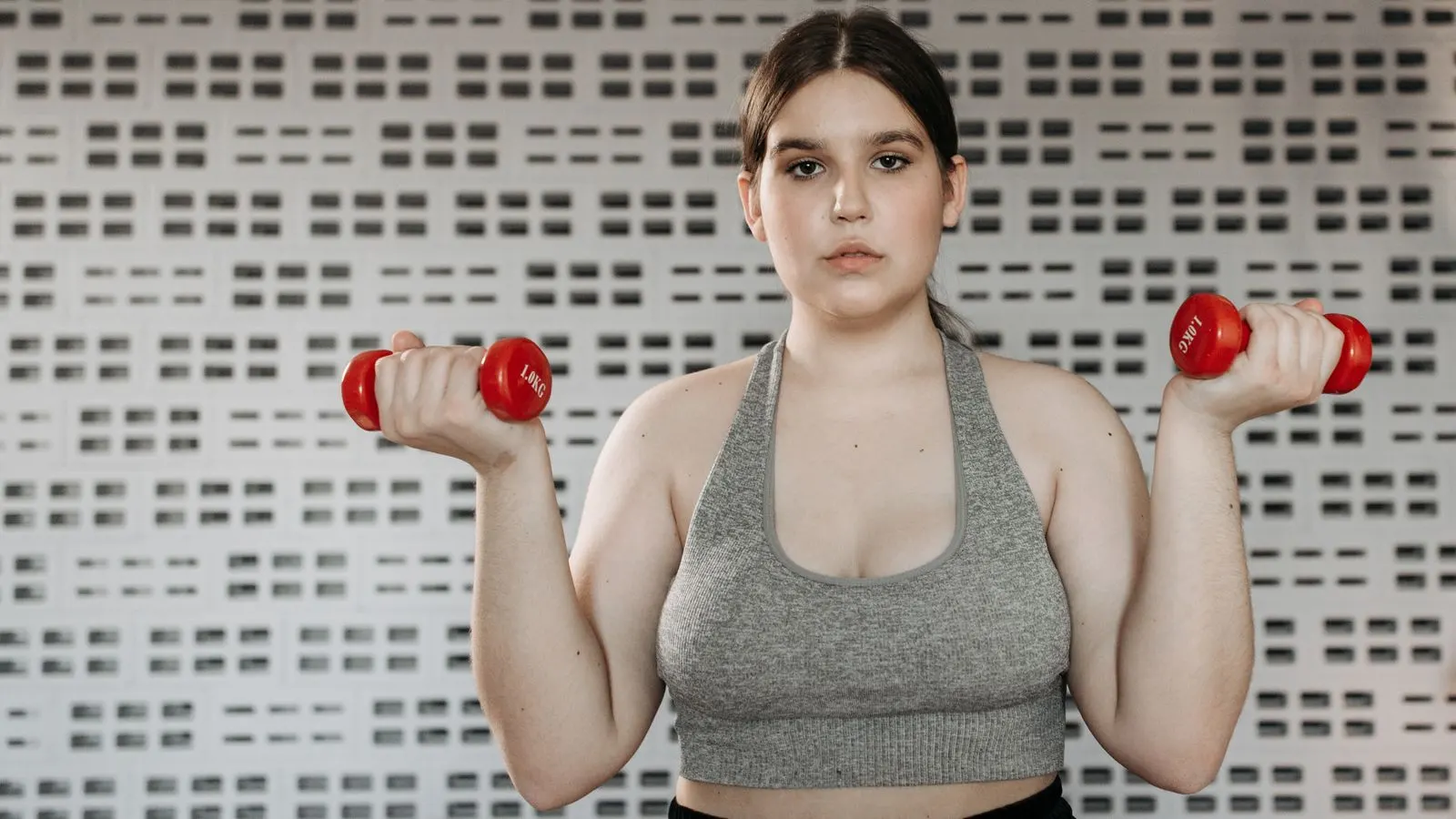
The best upper-body weight exercises for beginners cover four basic jobs: pushing, pulling, lifting overhead, and carrying or stabilizing a load. You do not need a long list of isolation exercises. Start with light dumbbells or another load you can control, learn the movement, and stop each set before your form changes.
What equipment do you need?
A pair of light dumbbells is useful, but the two sides do not need to work at the same time. One dumbbell can cover rows, presses, curls, and carries. A resistance band adds a pulling option, while a wall or counter works for bodyweight pushing.
Choose a load that lets you move smoothly through a comfortable range. The last repetitions may feel more demanding, but they should not require swinging, holding your breath, or changing position to finish.
- One or two light dumbbells
- A stable chair or bench that will not slide
- Clear floor space for the floor press
- Optional resistance band for rows and pull-aparts
Eight upper-body weight exercises for beginners
Begin with one or two sets of each movement. The repetition ranges below are starting suggestions, not pass-or-fail targets. Use fewer repetitions when you are learning and stop if you cannot maintain a controlled path.
| Exercise | Starting target | Main cue |
|---|---|---|
| One-arm dumbbell row | 6–12 per side | Support one hand and pull the elbow toward your hip |
| Dumbbell floor press | 6–12 reps | Lower until the upper arms meet the floor gently |
| Seated overhead press | 6–10 reps | Keep ribs stacked and press without leaning back |
| Dumbbell biceps curl | 8–12 reps | Keep elbows near your sides and avoid swinging |
| Bent-over reverse fly | 6–10 reps | Use a light load and a small controlled arc |
| Two-hand triceps extension | 6–10 reps | Keep the load light and elbows comfortable |
| Lateral raise | 6–10 reps | Raise only as high as you can without shrugging |
| Suitcase carry | 20–40 seconds per side | Stand tall without leaning toward the weight |
A simple two-day upper-body workout
Split the eight exercises across two days so each session stays focused. Leave at least one easier day between them. Warm up with five to ten minutes of easy movement and a light practice set of the first exercise.
| Day A | Day B |
|---|---|
| One-arm dumbbell row | Dumbbell floor press |
| Seated overhead press | Bent-over reverse fly |
| Biceps curl | Two-hand triceps extension |
| Suitcase carry | Lateral raise |
Upper-body sessions are only one part of a complete plan. Include lower-body, core, and aerobic activity across the rest of your week.
No dumbbells? Use these alternatives
For pressing, use wall or counter push-ups. For pulling, a securely anchored resistance band is more practical than trying to improvise a heavy household object. A band row and band pull-apart can replace the dumbbell row and reverse fly.
Avoid lifting awkward, open, or breakable containers. If you use a household item, make sure it is sealed, easy to grip, and light enough to control without changing your movement.
How to choose weight and progress
Use the lightest available weight while you learn. When you can complete the top of your repetition range with the same technique across all sets, add a small amount of weight or one or two repetitions. Do not increase both at the same time.
The Physical Activity Guidelines for Americans recommend increasing muscle-strengthening activity gradually. That principle matters more than any single dumbbell number because the right starting load varies widely from person to person.
- Record the exercise, load, repetitions, and number of sets
- Repeat a weight until the movement path feels consistent
- Increase one exercise at a time
- Reduce the load if you need momentum to complete a repetition
Frequently asked questions
What weight should a beginner use for upper-body exercises?
There is no universal starting weight. Choose a load you can lift through a comfortable range without swinging, leaning, or holding your breath. Start lighter than you think and increase gradually.
How many upper-body exercises should a beginner do?
A short session can include one push, one pull, one overhead movement, and one arm or carry exercise. More exercises are optional; good technique and a repeatable schedule come first.
How often should beginners train upper body?
Two nonconsecutive days per week is a practical starting schedule for many beginners. Adjust the volume and recovery time to your ability and health context.
This article provides general fitness information, not individual medical advice. Choose movements suitable for your ability and speak with a qualified professional when you have pain, an injury, or a health concern.
Sources
Jamie’s Fit uses authoritative health guidance to review general exercise recommendations.