
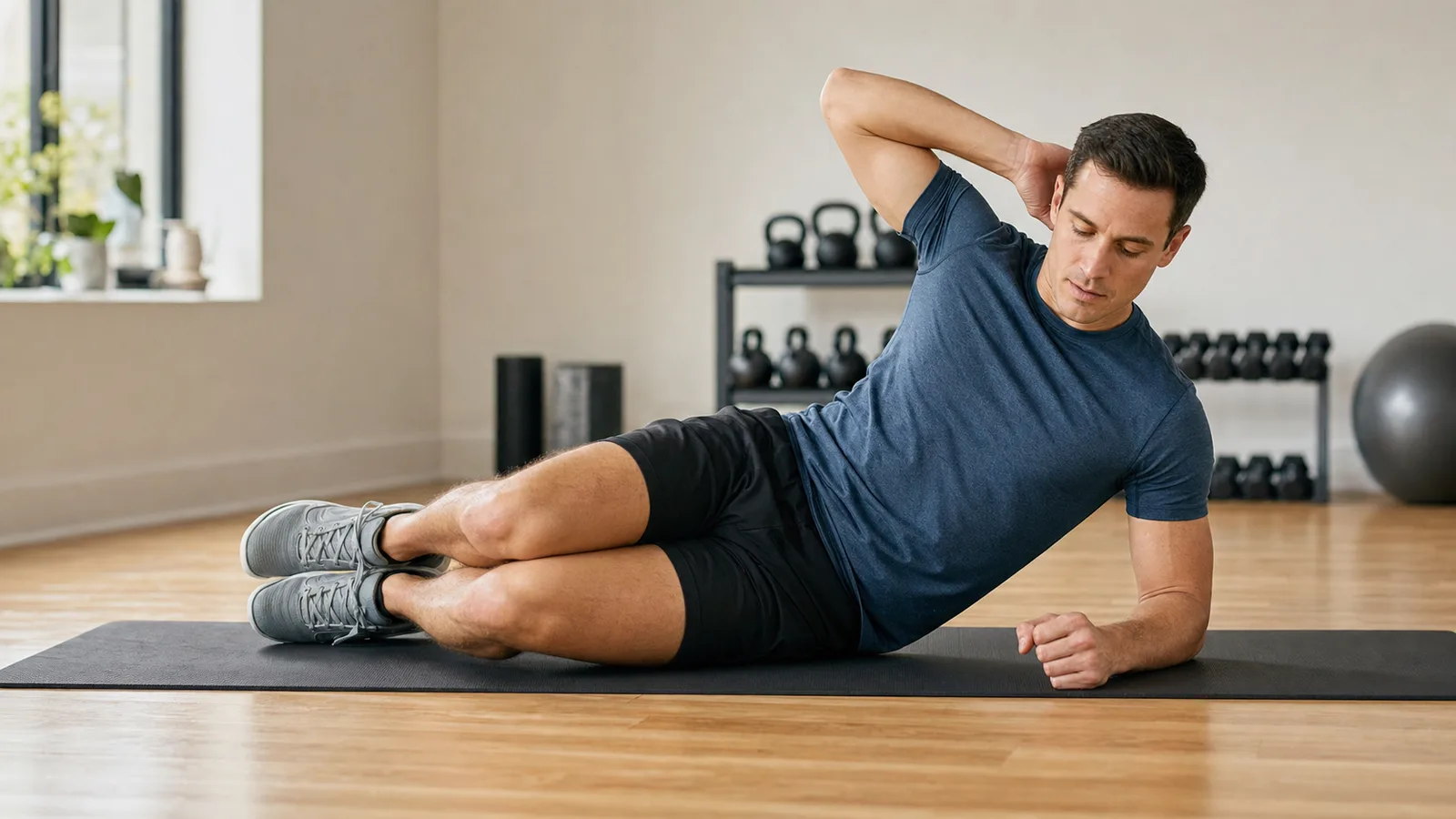
A side crunch bends or rotates the trunk to challenge the oblique muscles along the sides of your abdomen. There are several exercises people mean by the name: a side-lying crunch, a standing knee-to-elbow crunch, or side-to-side heel taps. The best version is the one you can perform without neck strain, breath-holding, or uncontrolled twisting.
How to do a side-lying crunch
Lie on one side with knees slightly bent and the lower arm resting comfortably. Place the top hand lightly behind the head or across the ribs. Exhale and bring the side of your rib cage toward the top hip, lifting only as far as you can without pulling the head forward.
Pause briefly, then lower with control. Think about shortening the space between ribs and hip instead of driving your elbow toward your knee. Complete eight to twelve repetitions, then switch sides.
Side-to-side crunches and heel taps
For heel taps, lie on your back with knees bent and feet on the floor. Lift the head and shoulder blades only if your neck feels comfortable, then reach one hand toward the same-side heel and alternate. Keep the movement small and controlled.
A standing side crunch is a more accessible option: shift weight to one leg and bring the opposite knee toward the elbow as you bend slightly through the side of the trunk. Hold a wall when balance is limited.
| Variation | Best for | Main caution |
|---|---|---|
| Side-lying crunch | Direct oblique shortening | Do not pull the neck |
| Heel taps | Alternating endurance work | Keep the reach small |
| Standing side crunch | No-floor option and coordination | Avoid yanking the knee |
| Side plank | Anti-lateral-flexion strength | Modify at the knees if needed |
What muscles do side crunches work?
The internal and external obliques create and control trunk rotation and side bending. The rectus abdominis also contributes, while deeper trunk muscles help manage pressure and position.
Core training should include more than repeated bending. Side planks, bird dogs, dead bugs, and loaded carries train the trunk to resist movement—an important job during lifting, walking, and sport.
Fix the most common form mistakes
If your neck tires first, support the head lightly, reduce the lift, or use the standing version. If your hip flexors dominate, bring the feet a little closer or choose a side plank. More range is not automatically better; the obliques can work hard through a small controlled motion.
Move on an exhale rather than holding your breath. Stop for sharp back, abdominal, or groin pain. People who are pregnant, recently postpartum, or recovering from abdominal surgery should get individual guidance before using loaded or high-pressure core exercises.
A balanced six-minute core circuit
Complete each movement for 30 seconds, rest for 15 seconds, and perform two rounds. Keep the pace slow enough to breathe and maintain control.
- Standing side crunch, alternating sides
- Dead bug with a comfortable arm and leg range
- Side plank from the knees, switching sides halfway
- Bird dog with a brief pause on each reach
Frequently asked questions
Do side crunches make your waist smaller?
They can strengthen the obliques, but they do not selectively remove fat from the waist. Body composition changes depend on overall nutrition, activity, training, health, and time.
How many side crunches should I do?
Start with one or two sets of eight to twelve controlled repetitions per side. Add repetitions or a harder variation only when your neck and back remain comfortable.
This article provides general fitness information, not individual medical advice. Choose movements suitable for your ability and speak with a qualified professional when you have pain, an injury, or a health concern.
Sources
Jamie’s Fit uses authoritative health guidance to review general exercise recommendations.